3 min to read
Coevolve Photo Exhibit
Experimenting outreach less explored models. The photo exhibit
When scientists think about science communication, most of the time they think about communication through the media. In particular, their attention is focused on traditional media, newspapers, radio, and television. Increasingly, their attention is also turning to social media.
During the Coevolve project, we wanted to broaden our communication horizons by experimenting with less common models, such as presentations at public events (and even inside sports shops!). The latest experiment we carried out was a photography exhibition.
The opportunity was provided by a public science outreach event that has been held in the city for many years, Cicapfest, coordinated by the FRAME communication team, based in Turin. Thanks to them, it was possible to contact the Botanical Garden of Padua and set up the exhibition.
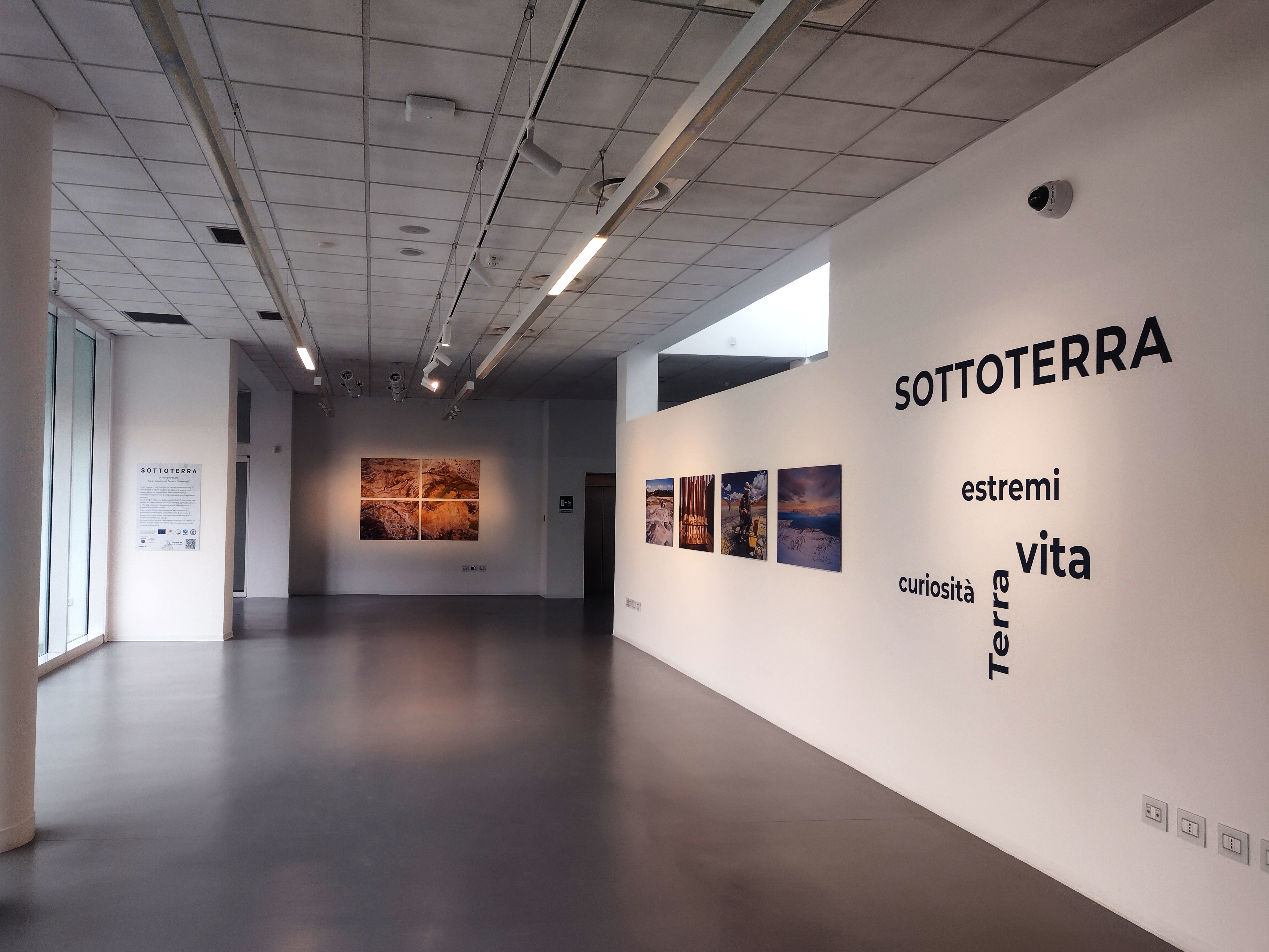
The result was, to say the least, very satisfying and had an even greater impact. The exhibition was held in the modern pavilions of the Padua Botanical Garden, one of the oldest botanical gardens in the world. The photographs I collected during four years of participating in expeditions from New Zealand to the Svalbard Islands were printed in large format, including a giant poster composed of four 100x70 cm panels placed side by side. In total, there were 17 images.
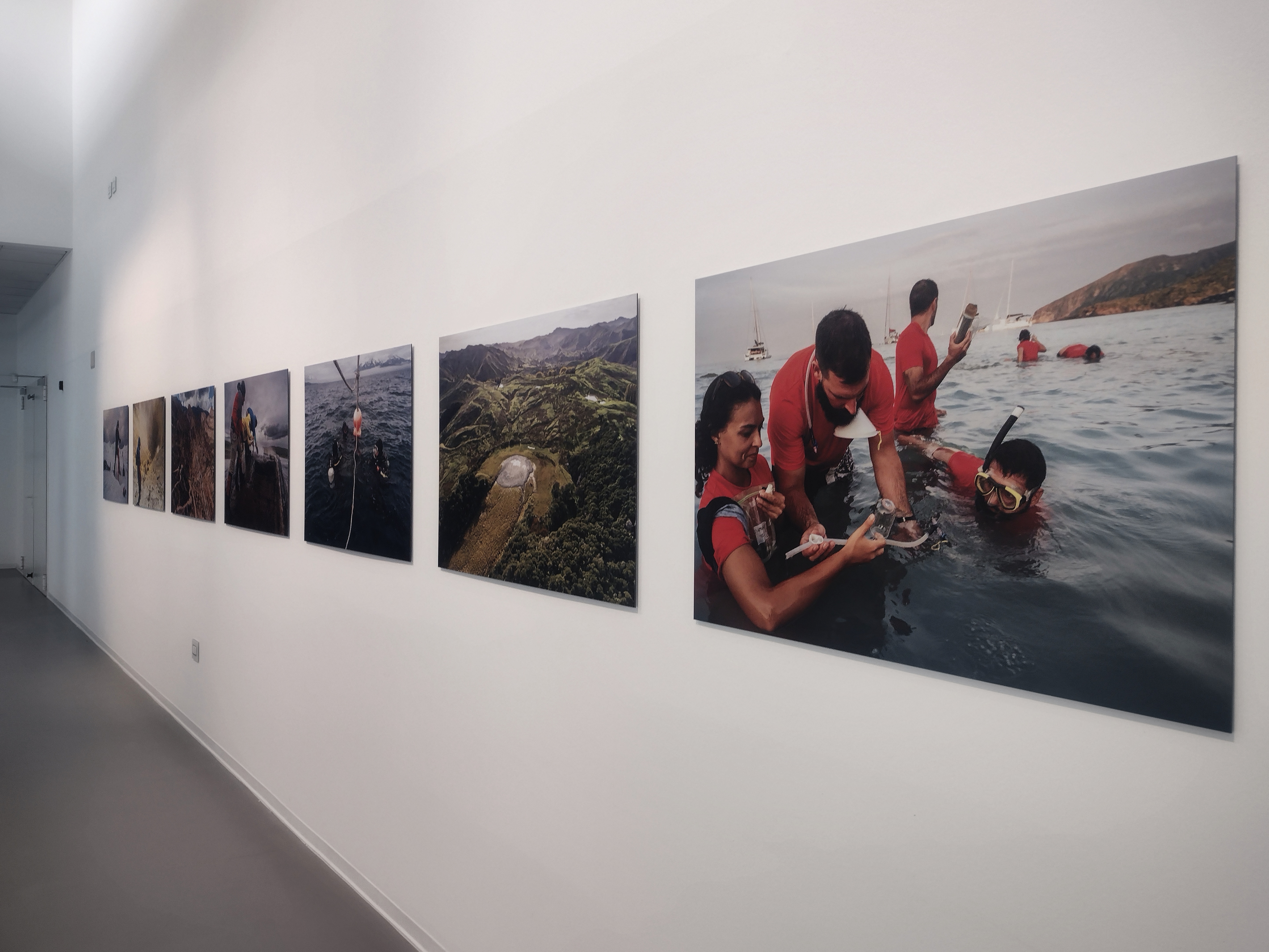
The exhibit. Image credits: Jacopo Pasotti
The exhibition opened during Cicapfest in November 2025 and closed on January 6, 2026. The opening was preceded by a presentation attended by myself, as photographer and project communicator, and Donato Giovannelli, leader of the Coevolve project.
We reached a very wide audience, from individuals to families and many school groups, especially in the morning. The exhibition is sober, with a single introductory panel and then large spaces where visitors can observe the images in complete calm.
Thanks to a QR code, visitors could access the fairly extended captions accompanying the images. We chose this approach on the one hand to lighten the exhibition and on the other to be able to measure the number of visitors: each time the caption file is opened, it is automatically counted. Obviously, we estimate that the number of visitors is much higher, as it is possible (or probable) that some of them arrived in pairs or families and only some of them used the QR code, sharing the captions with friends or relatives. We had 440 clicks on the captions, and we estimate some 700 (maybe 1000 considering the school classes) visitors in a bit longer than a month of display.
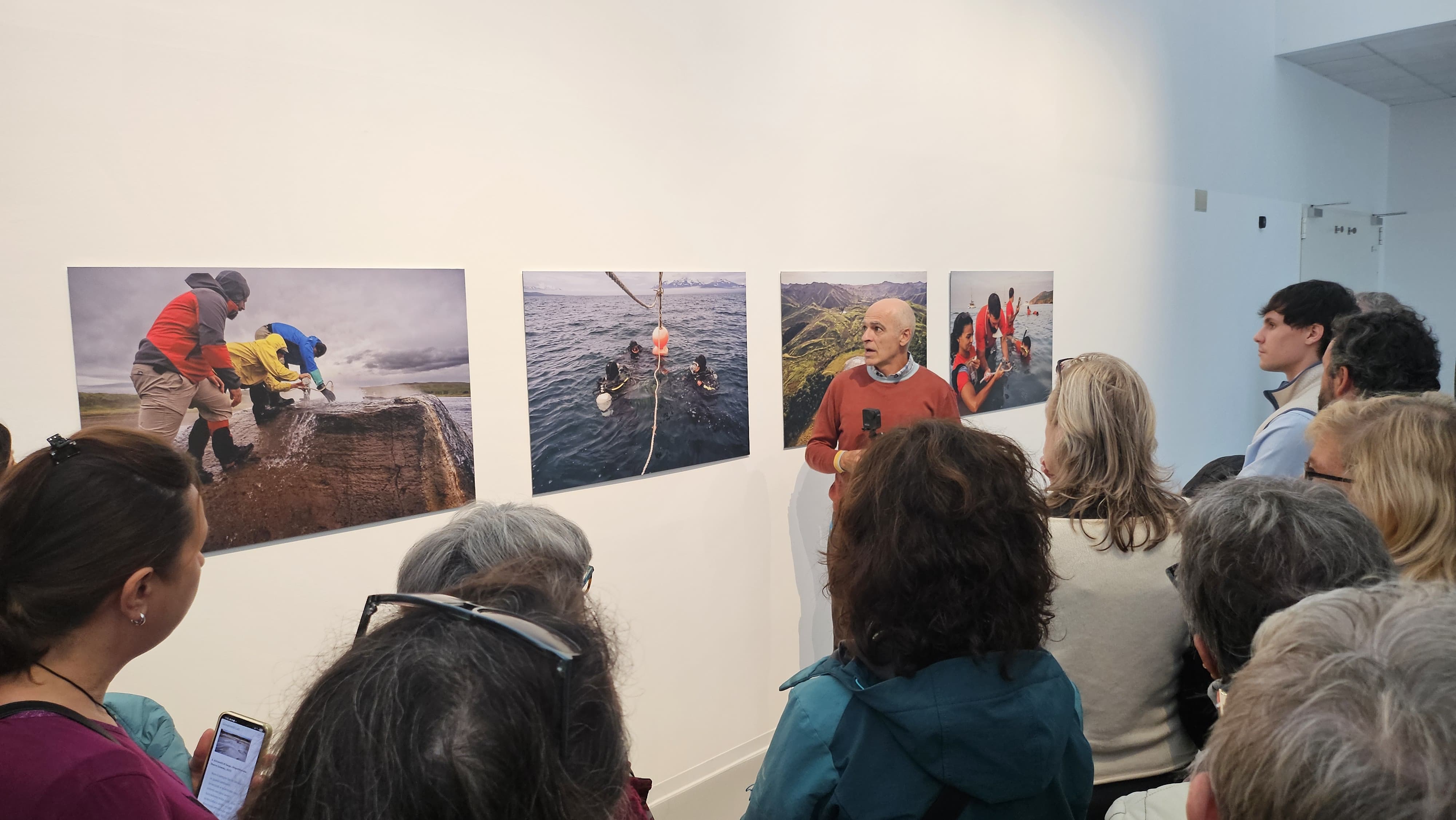
The exhibit. Image credits: Jacopo Pasotti
Organizing an exhibition is a complex undertaking, requiring the coordination of many different people and professions. The logistics are also complex. And, of course, there are costs involved. In terms of outreach, however, it is a unique channel that is underutilized, despite its highly engaging visual and emotional impact. It must be said that, even for the scientists and communicators involved, printing and displaying images has a remarkable concreteness and tangibility. For visitors, too, it is an opportunity for engagement and immersion that many other activities do not offer: a radio interview lasts a few minutes, a public presentation is also an experience that lasts a few minutes and whose timing is dictated by a precise schedule to which the audience must adapt. In a photographic exhibition, visitors can pause, think, discuss with each other, and invite each other to observe a particular detail.
We hope to be able to share the exhibition in other contexts and invite scientists to consider including the photo exhibition among their knowledge-sharing activities.